We’ve launched a new web portal! Visit findhistory.nd.gov to search our collections.
Due to a road closure, the Killdeer Mountain Battlefield State Historic Site is temporarily closed.



Prehistoric Archaeology
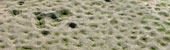
In North Dakota there is evidence of 11,000 years of human occupation prior to written records. These archaeological sites provide important scientific information about where people lived, the resources they utilized, the technology used, and lifeway changes through time. The photo above is of the Knife River Flint Quarries. Knife River flint was used from the earliest times into the historic period by Native American peoples to make stone tools.

Historic Archaeology
Historic archaeology combines archaeological and historical methods, sources, and perspectives to study the recent past. Examples of historic archaeological sites in North Dakota include fur trade posts, military posts, battlefields, trails, and homesteads. The image above is of Fort Clark State Historic Site. The site was first occupied by the Mandan by 1822 and later by the Arikara (1838). Fur trade posts (1830/31 - 1861) were constructed near the earthlodge village in hopes to enhance trade with the Native Americans, including the Mandans, Hidatsas, and Arikaras.
Architecture
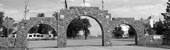
The State Historical Society of North Dakota (SHSND) has posted several historic contexts online for use in research and preservation planning.
Address:
612 East Boulevard Ave.
Bismarck, North Dakota 58505
Get Directions
Hours:
State Museum and Store: 8 a.m. - 5 p.m. M-F; Sat. & Sun. 10 a.m. - 5 p.m.
We are closed New Year's Day, Easter, Thanksgiving Day, and Christmas Day. We are closed at noon Christmas Eve if it falls on Mon.-Thurs. and are closed all day if it falls on Fri.-Sun.
State Archives: 8 a.m. - 4:30 p.m. M-F, except state holidays; 2nd Sat. of each month, 10 a.m. - 4:30 p.m. Appointments are recommended. To schedule an appointment, please contact us at 701.328.2091 or archives@nd.gov.
State Historical Society offices: 8 a.m. - 5 p.m. M-F, except state holidays.
Contact Us:
phone: 701.328.2666
email: history@nd.gov
Social Media:
See all social media accounts